Olive oil is one of the most treasured oils in the world, celebrated for its flavor, health benefits, and culinary versatility.
Olive oil is much more than just a cooking ingredient — it’s a product with different grades, flavors, and qualities, each with unique characteristics, health benefits, and prices. Understanding these differences can help you appreciate olive oil and make informed choices, whether for tasting, cooking, or gifting.
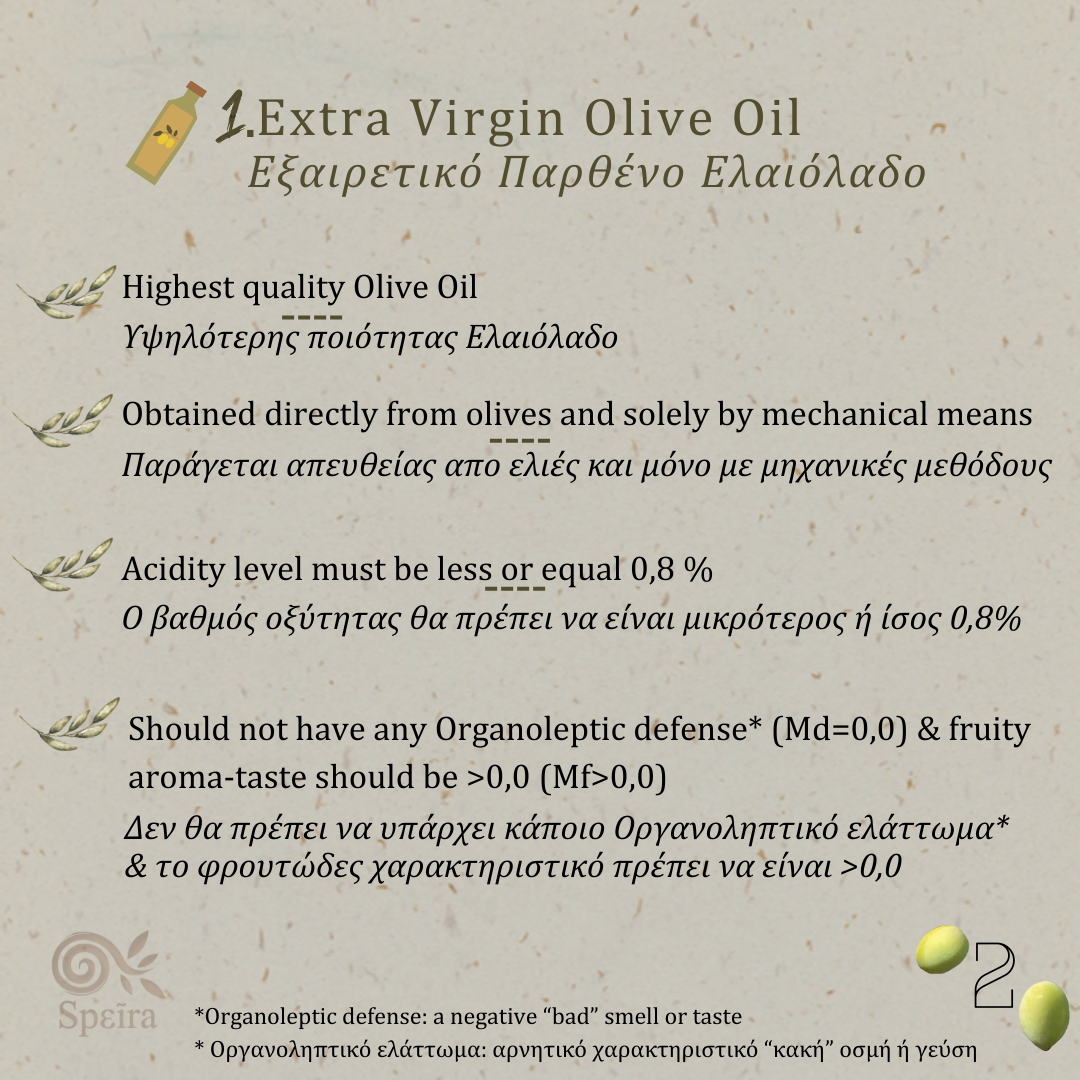
1. Extra Virgin Olive Oil (EVOO) – The Highest Quality Olive Oil
Definition: Extra Virgin Olive Oil is obtained directly from olives using only mechanical methods, without any chemical treatment.
Key Characteristics:
Acidity level: ≤ 0.8%
Organoleptic properties: Must have no sensory defects (Md = 0.0)
Fruity aroma & taste: Must be present and greater than 0 (Mf > 0.0)
Why choose it: Extra Virgin Olive Oil represents the highest quality olive oil, offering a fresh, fruity taste and rich aroma. Ideal for salads, drizzling, and finishing dishes.
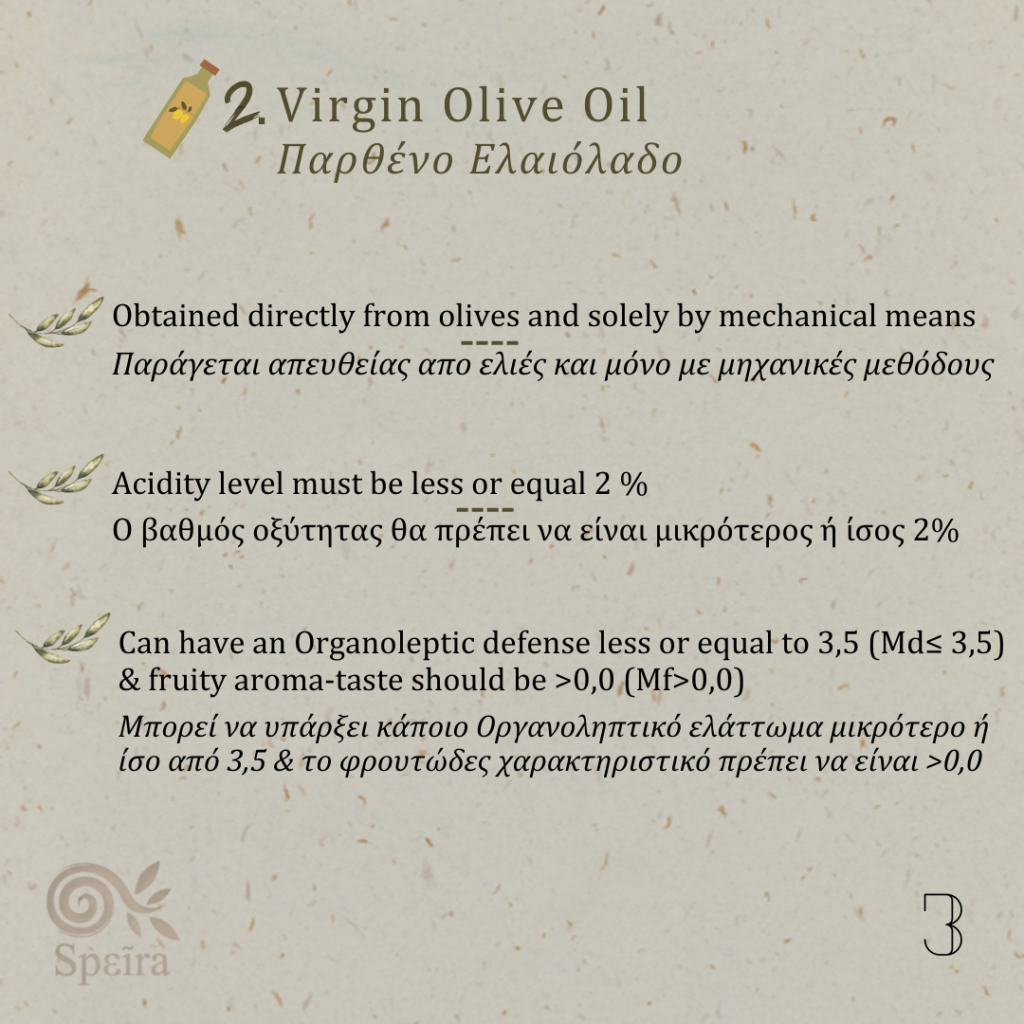
2. Virgin Olive Oil
Definition: Virgin Olive Oil is also produced directly from olives using only mechanical methods, but with slightly more tolerance for natural imperfections.
Key Characteristics:
Acidity level: ≤ 2%
Organoleptic properties: Minor defects allowed (Md ≤ 3.5)
Fruity aroma & taste: Must be present and greater than 0 (Mf > 0.0)
Why choose it: Virgin Olive Oil is slightly lower in quality than Extra Virgin but still offers natural olive flavor. It’s perfect for cooking and sautéing where a subtle olive taste is desired.
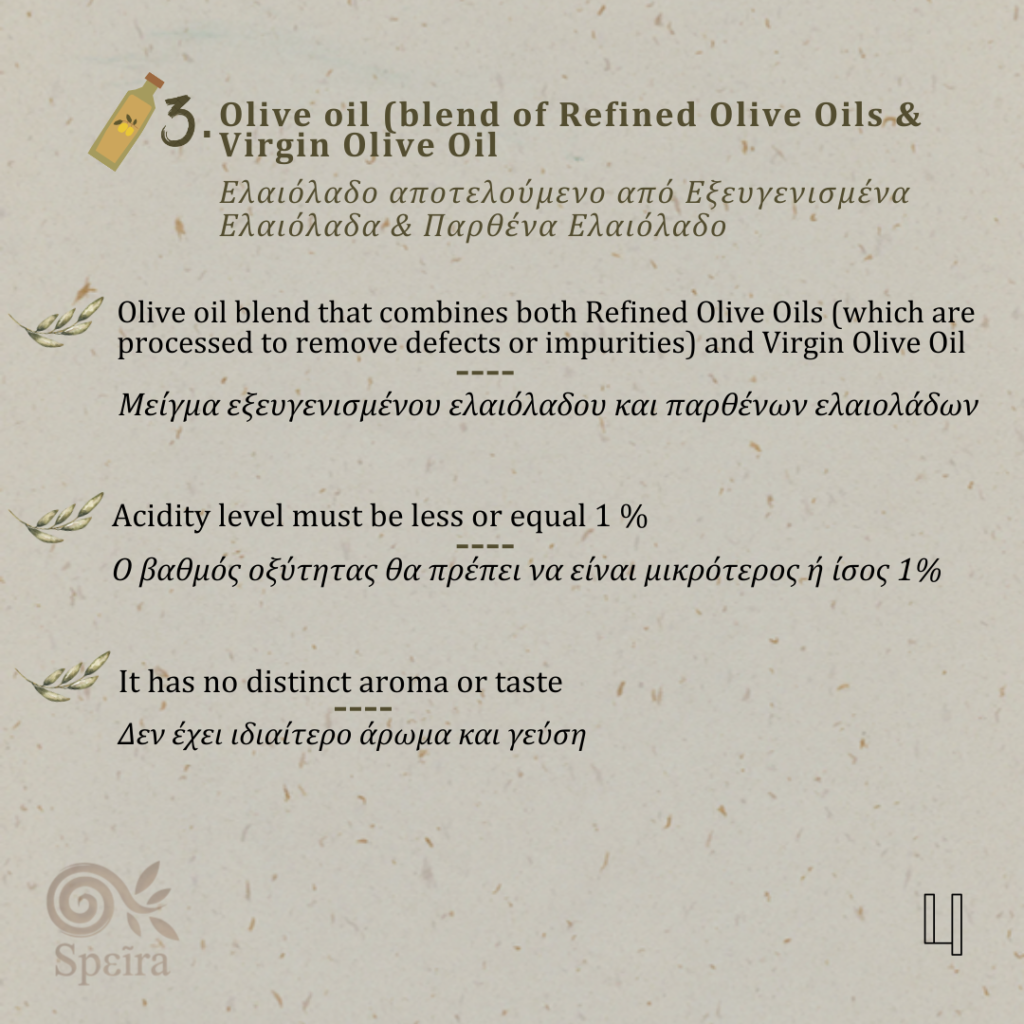
Olive Oil (Blend of Refined & Virgin Olive Oils)
Definition: This type of Olive Oil is a blend of refined olive oils and virgin olive oil. Refined oils are processed to remove defects and impurities.
Key Characteristics:
Acidity level: ≤ 1%
Aroma & taste: Neutral, with no distinct sensory characteristics
Why choose it: Olive Oil blends are versatile and mild, suitable for frying, baking, and general cooking, especially when a strong olive flavor is not desired.

 EN
EN  EL
EL